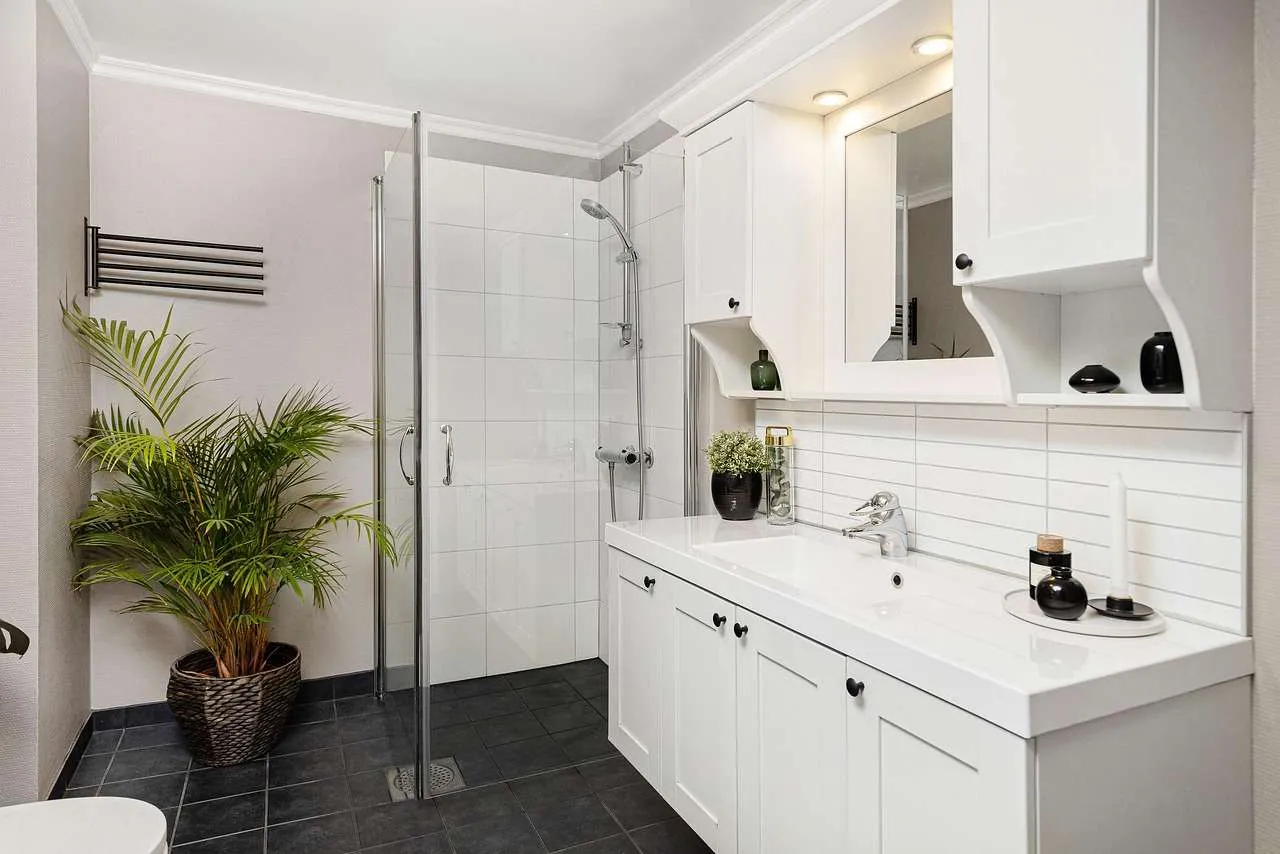
In many homes, the bathroom is a compact stage where style and practicality must co-exist. This guide of small bathroom ideas draws on design experience to help you optimize every inch while keeping it elegant and durable. Whether you're remodeling a powder room or upgrading a master bath, the focus is on layout, light, storage, and materials that resist moisture.
Start with a thoughtful layout
Since floor area is precious, plan fixtures by workflow. A pocket door or a slim, recessed door can reclaim width. If you can't change the door, choose a compact vanity and place the toilet and shower to maintain at least 30 inches of clearance for comfortable movement.
Zoning and workflow
Organize the space into zones: water closet, vanity, and shower. Place the toilet behind a partial wall or in a corner for privacy; pair a linear vanity with a single sink to reduce width and clutter.
Light, color, and visual tricks
Light and color are your allies. Pale walls and large-format tiles reflect more light and visually expand the room. Mirror-and-light combos widen reflections, while a well-placed skylight or frosted window can bring in daylight without sacrificing privacy.
Storage that actually works
The secret to small bathroom ideas is vertical storage and clever niches. Use a wall-mounted vanity to keep the floor open, add recessed shower niches, and install medicine cabinets with mirrored fronts. Use pull-out organizers and baskets inside cabinets to keep everyday items accessible yet tidy.
Smart storage ideas
- Shallow pull-out organizers inside cabinets
- Over-the-toilet shelving with closed storage
- Hanging baskets or hooks for daily-use items
Fixtures and fittings that save space
Choose compact, high-function fixtures. A curved or quadrant shower enclosure can feel roomier than a square stall. A wall-mounted sink with a narrow vanity or open shelf frees floor space, while a concealed or wall-hung toilet reduces the visual bulk. Frameless glass doors avoid heavy vertical lines and keep sightlines clean.
Materials, durability, and maintenance
Durable, moisture-resistant surfaces pay off. Opt for porcelain or ceramic tiles with sealed grout, and consider quartz countertops for longevity. Matte finishes hide water marks, and lighter tones keep the space feeling airy. Select finishes that are easy to clean and maintain in a humid environment.
Compare layouts at a glance
To help you visualize options, consider this quick comparison table.
| Layout Option | Pros | Cons | Best For |
|---|---|---|---|
| Open Shower with Glass | Feels spacious, easy clean, minimal walls | May require moisture control adjustments | Modern, small master baths |
| Pocket Door + Wall-Mounted Vanity | Maximizes floor area, clean lines | Higher install cost | Very small or narrow layouts |
| Corner Shower + Compact Toilet | Efficient use of corner, reduces sightline | Limited shower width | Budget-friendly remodels |
Budget, permits, and longevity
Plan for a sensible budget with a cushion for surprises. Durable finishes may cost more upfront but pay back in maintenance. If you’re renovating in a rental or under a tight schedule, focus on fixed elements like lighting, mirrors, hardware, and textiles; these can refresh the space without a full gut. Always verify moisture ratings and comply with local codes when moving plumbing or altering the structure.
Real-world examples and inspiration
From a shallow rectangular bath with a wall-mounted vanity and frameless shower to a compact alcove with built-in niches, the successful small bathroom ideas share a common thread: clarity of function paired with restrained finishes that keep sightlines open. These designs demonstrate how thoughtful geometry and materials transform cramped spaces into calm, usable rooms.
Summary: Designing for small bathrooms means embracing efficient layouts, intelligent storage, and durable, moisture-ready finishes. By prioritizing flow, light, and vertical space, you can create a bathroom that feels larger, more functional, and stylish without a major remodel.
